Wednesday, May 26, 2010

liveblogging 1-2-3

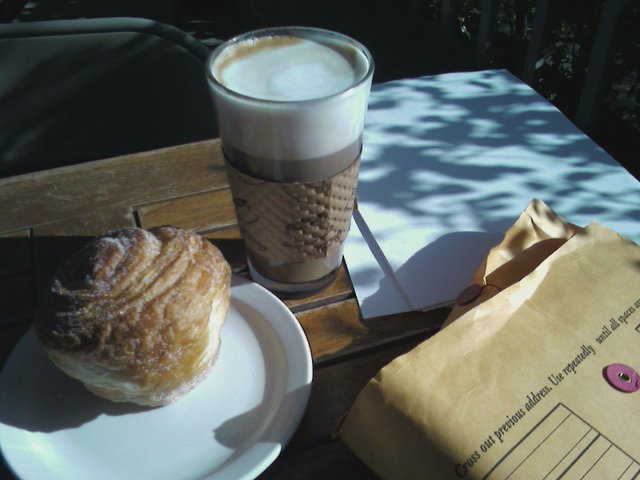
That's liveblogging at Local 123 on quite a mellow afternoon in a May that has seemed more like a February, in a year when February seemed more like July...

  • 2:26pm. So, yes, things are a little out of balance, which should make for perfect blogging. Considering the theory that when everything's right with the world, and you're feeling satisfied about the way things are, then you're too immersed in the moment to get the remove you need to write about the moment. Blogging and meditation, on that count, wouldn't go all that well together. I wonder how many meditation blogs there are out there...
  • 2:28pm. First task of the day, after catching up on emails, is to get back to the Leather & van Dam Ecology of Language Acquisition chapter from Michael Toolan: "An integrational linguistic view of coming into language: Reflexivity and metonymy". Ooohh. The trees outside the window respond, waving back and forth gently in the afternoon window, shadows playing on the sidewalk and concrete cafe floor. It's the first time I've noticed that the front wall is actually a sliding garage door. And Journey's "Faithfully" comes on, but then is cut off before Steve Perry can hit his soaring notes in the end. We better let him finish:


  • 3:27pm. We continue our journey through the 1980s as A-ha's "Take on me" echoes through 123, mixing with the jingling change at the register, the passing cars, conversations from tables at the other end...
  • 5:08pm. After various other activities, eating, getting another cappuccino, feeling the afternoon breeze kick up through the door (window? where IS that breeze coming from?), staring more at the Tooley chapter, talking to neighbors, checking email, reading another article, and now finishing writing up a summary of the chapter on my wiki for Rick to read--and thinking about my post-in-progress on Found in Translation--I'm again struck by the question of whether or not writing for myself in whatever intellectual pursuit I'm engaged in, is enough. And writing these words on this blog only heightens this sense of contradiction. I'm triple publishing right now. Must everything be visible? Is it really just writing anymore when writing is simultaneously publishing, of some sort, on some platform? Would I myself as a writer (or should I say blogger?) be motivated to write as much if these words, and the chapter summary I'm typing up, and the FIT blog entry I'm writing as part of (or leading to) my dissertation, were not online? Does Writing nowadays = writing + publishing?

Thursday, May 20, 2010

thoughtstream at the abbey, santa cruz

I settled on The Abbey on an inspiration, when I remembered that Sarah would be making her weekly pilgrimage back to UCSC. Got in around 10:45 and settled in with double capp and a piece of zucchini bread, both quite nice. But as I'm not a coffee-reviewer I'll leave those behind for the moment and open up the floor for some running thoughts as I sit with the music and Homi Bhabha's The location of culture and Roy Harris' Rethinking writing. Kind of an odd trio to be at the table together, but such it is...

  • 11:03AM. Berkeley needs a cafe like The Abbey in Santa Cruz: a coffee lounge with upright piano, stage, couches, smooth tunes, windows hanging in the middle of the room, chandeliers, mirrors and, oh yeah, good coffee and beer.
  • 11:29AM. Last time coming here, I remember hearing Jónsi and being enervated for the drive down the coast, on the way to UCCLLT conference in San Diego. Quite a different day today, to be here not on the way somewhere else, but here as the destination.
  • 11:55AM. Why does Roy Harris have to invent an entire body of terminology to make his argument. Does anyone else talk about the writing of languages as "glottic writing"? Then there's the "surrogational" perspective on writing, "segregationist" and "integrative" approaches to linguistics...come to think of it, has he really made it beyond Saussurian dualism?
  • 12:29PM. Reading more of Harris and the conversation from the next table infiltrates into my consciousness. Woman tells man: "Don't you know that when you buy running shoes you should buy them a half size too big 'cause when you're running your foot gets hot and ends up expanding a little?" Man replies, "No, I didn't know that." Neither did I. 
  • 1:46PM. Wow, much time has passed and I am struggling with this text. I don't know if I'm rested enough to wrestle with these fundamental notions of symbolism and representation that Harris is working with. So what prompted me to write now? I just noticed that the girl on one side of me, and the guy on the other, both had left their tables for a few minutes (and the guy for much longer) with computers sitting on the table. They guy had even left his wallet and phone on the table for quite a little while. People are so trusting here, I thought. Wow. I wouldn't leave this computer sitting on a table here or anywhere. How has Berkeley made me who I am in terms of feelings of public safety? 
  • 2:17PM. Whoah, music gone, Harris getting old, room getting warm, butt hurts, need to go to the bathroom, getting hungry. Time for a #changeofscene.
Until next time, lovelies! 

    Sunday, May 9, 2010

    Cream Cheese Coffee Cake

    In honor of Mother's Day, and because I don't want to lose the recipe again, I'm putting up the recipe for a family favorite, and my grandmother's all-time-favorite dessert--at breakfast, lunch, dinner, or in between. This cream cheese coffee cake really is amazing, if only you can get the layer of dough to spread out on top of the cream cheese. But don't take my word for it; try making it yourself. And after you've given up, then get someone close to you with more patience to pick up the baton, and stick around for the results...

    First, the filling:

    • 1 lb. cream cheese, softened (Yes, that's "lb." as in "pound". But you're gonna share, right?)
    • 1/2 cup sugar
    • 1 tsp vanilla
    • 2 eggs

    Mix these ingredients well & set aside. ("Aside" can be a refrigerator overnight, if you want to get ahead of the game)

    Next, prepare the streusel topping ingredients: (Where does "streusel" come from btw? I suppose I should google it, but then again I'm kind of glad to leave in the realm of the vague...)

    • 1/4 cup sugar
    • 3 tbsp. butter
    • 1/4 cup flour (ooh, look, something healthy!)

    Mix these well and set them aside (for novices like me: don't set them aside in the same bowl you're using to set aside the filling). Add a handful of oatmeal, and a little cinnamon, too, if you like. How much? "A little," says Gran. Just try it.

    Next, prepare the cake ingredients:

    • 3 cups flour
    • 1 tsp. baking soda
    • 2 eggs (yup, that's two more eggs)
    • 1 cup sour cream (mmmm)
    • 1 tsp. baking powder (still can't keep straight in my head what the difference is between baking soda and baking powder, but apparently they're different ;)
    • 1/2 cup butter (that's a full stick, folks)
    • 1 tsp. vanilla
    • 1 cup sugar

    Start preheating your oven to 350 degrees.

    Sift the dry ingredients together in a big mixing bowl (but notice that sugar is not considered a "dry ingredient" just yet). Cream the sugar, butter and eggs together separately ("cream" basically means "mix", as far as I can tell). Add the sour cream and vanilla and mix well. Then add this concoction to the dry ingredients and mix (slowly at first, or you're going to have a flourstorm on your hands).

    Pour half of the cake batter into a greased and floured 9" X 13" baking pan. Pour in the filling, then the remainder of the cake batter (it will be very hard to spread. Two basic strategies on this--one: put a little more flour on the remaining half of batter and try to roll it out with a rolling pin or by (very dry and flour-coated) hand, and make a shape that approximates the shape of the bottom half, and lay it on top over the filling; two: assuming that the previous option ended in total disaster, try breaking up the cake batter into little bits and dropping the little bits over different parts of the filling. Then try spreading out each piece. Don't worry that you can't cover the whole thing without submerging the dough into the cream cheese mix and making a total mess. That's part of the fun, and, in the end, an uneven top bakes great, with all kinds of crunchy nooks and crannies for your later eating pleasure).

    Whew. Then sprinkle with streusel topping.

    Bake at 350 deg. for 45 min and...  voilà!! It's munching time. And don't wait...this one is good warm, while the inside is soft and the topping crunchy...

    Friday, May 7, 2010

    here's looking (back) at you

    Flowers and tears, falling rain and jetstreams with waterdrops, all in delicious swirls of brown and white: this is the stuff of in-froth designs on top of the morning's cappuccino. And to touch these patterns to one's lips has traces of the erotic along with the ambivalence one might feel at drinking a snow-capped mountain scene (or, more likely, distorting it beyond recognition with that sideways-pulling first sip).

    But I have to say, I found this morning's design just plain unnerving. Who--what--is this, looking back at me from the froth?

    Thursday, April 29, 2010

    running thoughts at cafe dí bartolo

    10:35am. Today I thought I'd be going over to Woody's but it turned out to be a further walk than I had bargained for. Ended up on Grand Avenue, crossed over to the shady side of the street and entered a space that made me think first and foremost of...a mountain lodge. It's all about the smoky smell in the air, like wood burning somewhere. Which is funny, because although there are wood rafters twenty feet up (love those tall ceilings!) one wall is brick and the other side is plaster.

    Though, come to look more closely at it, there are paintings of wolves on the wall...

    Wednesday, April 21, 2010

    some transcaffeinated techniques of disciplinary marking

    Here the title of the post makes a promise that the body won't be able to deliver; that much I know. I'm sitting marking papers for a Berkeley class on Language & Power, and as I work my way through the stack I'm starting to notice some--what shall I call them--eccentricities in my grading tendencies.

    Perhaps you've experienced this, too, if you have a job that is composed of repeating the same procedure a discrete number of times, each of which seems like a job unto itself, the completion of which seems deserving of celebration, taking a break and, yes, procrastinating from the next one by starting on a blog post.

    In the class, we've been reading Deborah Cameron's Good to Talk?, where she decries the way that language has become commoditized and made into a tool of worker empowerment and self-realization, corporate branding, and object of therapeutic intervention: learn to talk better, and you'll be more in touch with yourself and more able to smooth out any 'misunderstandings' that might be plaguing you in your home and work life. And students are being asked to relate this back to Foucault, whose notions of discipline as a socially normalizing force that is internalized and exercised by individuals upon themselves, from Discipline and Punish, are key for thinking about how language is being used.

    But actually, as I sit here plowing through a pile of papers (sorry, kiddies, I luv u just the same! :), I'm thinking more about Foucault's invocation of Borges' bizarre taxonomy that he calls the "Chinese encyclopedia"--an example of the kind of assemblages of radically different kinds of things into a single list or category or other form of association, for reasons that are totally befuddling to the outside observer.

    What spurred this thought? Well, as embarrassing as this may be, I guess I'll just have to go ahead and write some of the things going through my mind as I'm grading, deciding not what grade to give on a certain student response (although I'm thinking about that too, but that's work), but which paper to grade next, and just how much progress I'm making (or not) as I grade.

    Now, I present a procedure for grading a stack of papers, foregrounding principles of logic and efficiency. That is, basically a taxonomy of random thoughts that, together, help me make it through the pile:
    1. First grade those papers that are not stapled together, so as to remove them and their potential for decomposition and confusion from the pile. Try not to blame the student for not having a stapler or access to a stapler (though I'd be lying if I said that thoughts like this didn't float through the mind on a subconscious level)
    2. Then grade those papers in which students have not written the question prompts for their paragraph responses; these require more work as you have to refer back and forth to a printed copy of the questions, or, to save time, another 'more diligent' student's response sheet with said questions written down.
    3. Count papers frequently, preferably after each is graded, to make triple sure that you haven't over-estimated in your mind the number of papers remaining to be graded. Arrange them all in a neat stack after counting. 
    4. Extending point #2, give slight preference to those papers where students have put the question prompts in bold (better) or italics (still good).
    5. Give slight preference to non-Times New Roman fonts. Such papers give the impression of being attended to more carefully than those with the default, though this is a theory that is often disproved. The point, though, is that there's a curiosity that goes along with discovering whether the student has unusually witty responses, that makes the task of grading somewhat more tolerable.
    6. Try not to look back at the stack of papers too frequently. But do feel the pile of completed papers as it grows. For added pleasure, pick up the pile frequently in your hand. Weight = accomplishment. 
    7. Save for last those papers that are printed only on one side with double spacing; they are thickest, quickest to read, leading to a rapid sense of progress as the pages can be turned more quickly and the stack of papers depleted.
    8. No definitive statements can be made about papers that are longer or shorter, all other things being equal. Shorter responses often take longer to grade and, more often than not, require marginal comments. A definite timesink.
    9. Whatever you do, reward yourself frequently: stretching is nice. Checking email or Facebook updates is another option. But when things are really getting tough, you need to resort to ingestion. This post, for example, and the work that has gone into grading this pile of papers, has drawn on at least 2 pastries and 4 caffeinated beverages, from Strada, Local 123, and probably somewhere else too. But I'm repressing that thought now, because I still have 6 papers to go. I'll see if I can make it on this cappuccino...

      Tuesday, April 13, 2010

      sitting ducks

      Thanks to Sarah and Jeff for passing this news along, about a few recent thefts of computers from cafe-goers in the East Bay. From the Oakland Tribune: "Alameda: Teen pepper sprays woman inside Peet's coffee shop".

      Scary and maddening stuff, and I have a pretty visceral response to news like this, having had my Samsung netbook housed not too long ago from a computer lab on the Berkeley campus......what can we do to protect ourselves? Just stay at home? Chain ourselves to our machines?